Ctrl+K

Agile Prototyping 2025 documentation

  • GitHub
  • Home
  • Assignments
    • A1 - How to Grow a Tent, Bench, or Desk?
    • A2 - Building System Needs
    • A3 - Building System Growth
    • A4.a - How to Grow a Building in Space
    • A4.b - Apply Now
  • Concepts
    • Agile Future Design Plan (AFDP)
    • Agile (Protototyping)
    • Agile Prototype
    • Architecture Machine
    • BHOM - Buildings and Habitats Object Model
    • Biomimetics
    • Building
    • Building Systems
    • Computational Design
    • Design Science Research Methodology (DSRM)
    • Future Design Experience
    • DesignGrid
    • Development Stages
    • Environment
    • Evolution
    • Features
    • Futures
    • Generative Design
    • Github
    • Grasshopper
    • Growth
    • Markdown
    • Meme
    • Meta Disciplinary Building Analysis
    • Morphogenetic Prototyping
    • Parametric Paradox
    • Phenotype
    • Phylogeny
    • Physical Prototype
    • Product
    • Building Requirements
    • Reverse Engineering
    • Science Fiction Prototyping
    • Singularity
    • Speckle
    • Three Transitions
    • Uncertainty
  • Examples
  • Futures
  • Building Design Genes
  • Learning Objectives
  • Methodology
    • M1 - Model Features
    • M2 - Identify Stages
    • M3 - Biomimetic Search
    • M4 Evolution
    • M5 Architecture
  • Projects
    • Future Factory
    • GrowHouse
    • DTU Lunar
  • Roles.
  • Schedule
  • Systems
    • Build
    • Space
    • Structure
  • Repository
  • Suggest edit
  • .md

M3 - Biomimetic Search

Contents

  • 3.1 Functional analysis
  • 3.2 Specification
  • 3.3 Search
  • 3.4 Focus
  • 3.5 Design and Test

M3 - Biomimetic Search#

We can’t embed videos in markdown so please click the image below to listen to the awesome Janine Benyus introduce the concept of biomimicry. image

Please note that this part is iterative, for inspiration we should look to Lenau 2009. This part relies on you already having completed parts 1 and 2 and having a staged development diagram with functions expressed in nouns and verbs.

3.1 Functional analysis#

In this step you take the function you defined in the the last step of AP2.

  • Fill in the ‘functions’ table.

  • Use the functions table to fill out the functional tree, carfully seperating functions and means.

  • Relate this back to stages you defined in AP2.

Step 3-1

3.2 Specification#

This step results in the requirements that need to be focus the biomimetic search and test your design.

  • Apply these to the stages you identified in AP2.
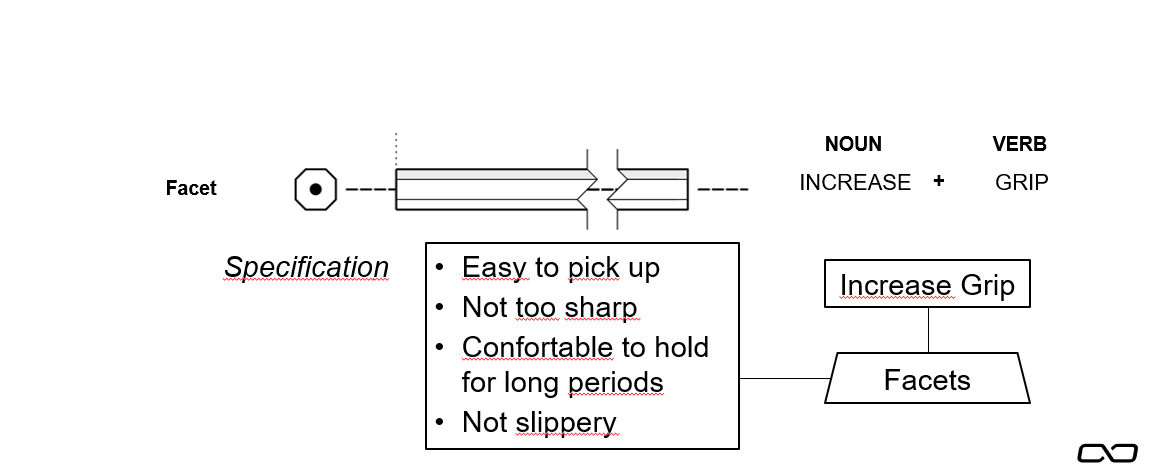
Step 3-2

3.3 Search#

You can do this in a number of ways:

  • Brainstorm ideas from memory or experience, where does Biology also offer that function.
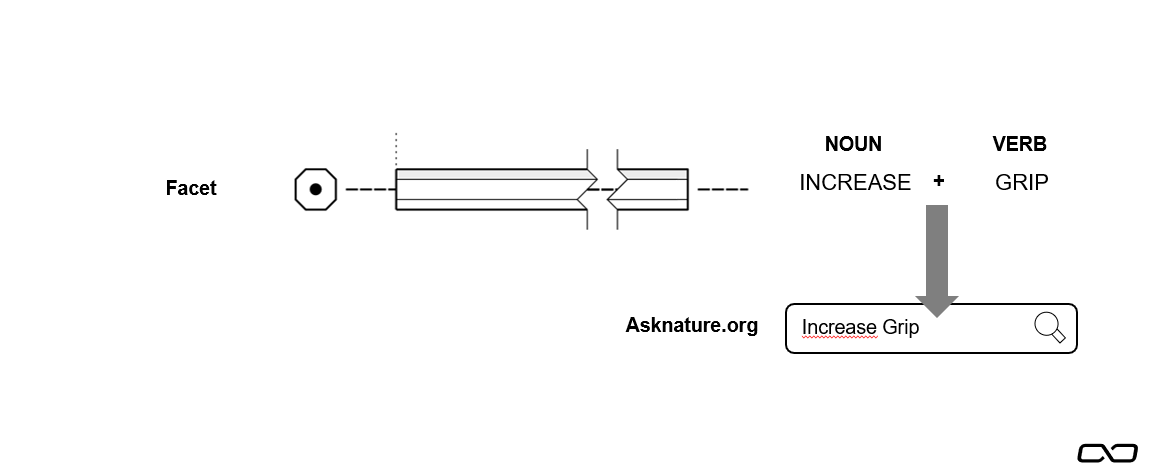
Step 3-3

3.4 Focus#

reflect on the proximity to the requirements you identified in step 2 for each biomimetic concept. Select one that best satisifies the requirements and inspires you with ‘design’ ideas / neww solutions.
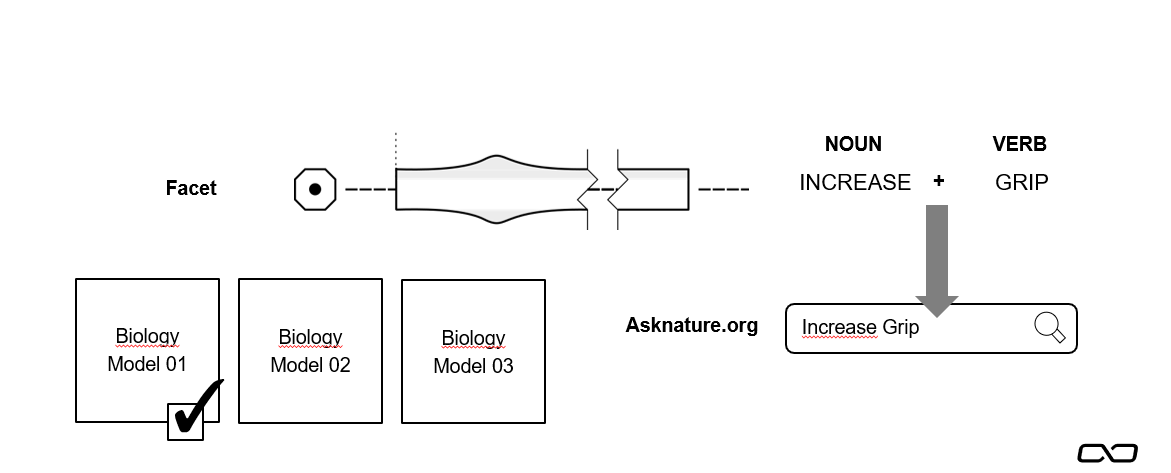
Step 3-4

3.5 Design and Test#

  • Apply the biological inspiration to a specific growth stage in system. y

  • There is no specific way to do this stage.

  • Choose an approach that works for you.

  • Check against requirements, does it satisfy the requirements from step 2?

  • The output of this is probably a drawing, but this is also a case of waht works for you.
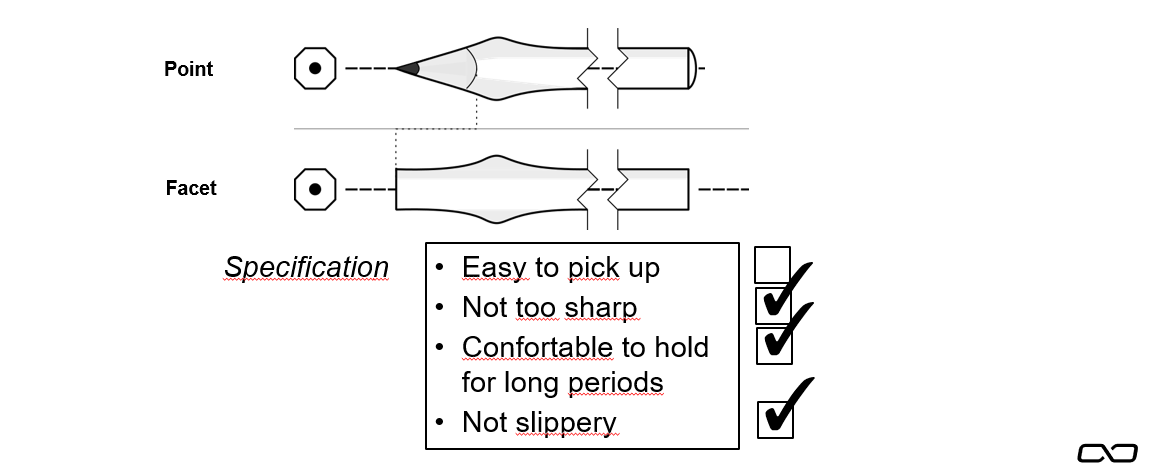
Step 3-5

previous

M2 - Identify Stages

next

M4 Evolution

Contents
  • 3.1 Functional analysis
  • 3.2 Specification
  • 3.3 Search
  • 3.4 Focus
  • 3.5 Design and Test

By Tim McGinley

© Copyright 2035-2015, Hacking the future since 2035.